1
Research Insights
2-3 weeks
Welcome to the internet archive for Edward de Vere Marginalia.
If you like historical mysteries, old books, or Shakespeare, you’ve come to the right place.
Here you will find current research, backed by photographic evidence, aiming to recover the Elizabethan-era annotations of one of the most misunderstood and undervalued persons in world history. His notes turn out to provide a play-by-play kaleidoscopic snapshot of Shakespeare’s mind in action.
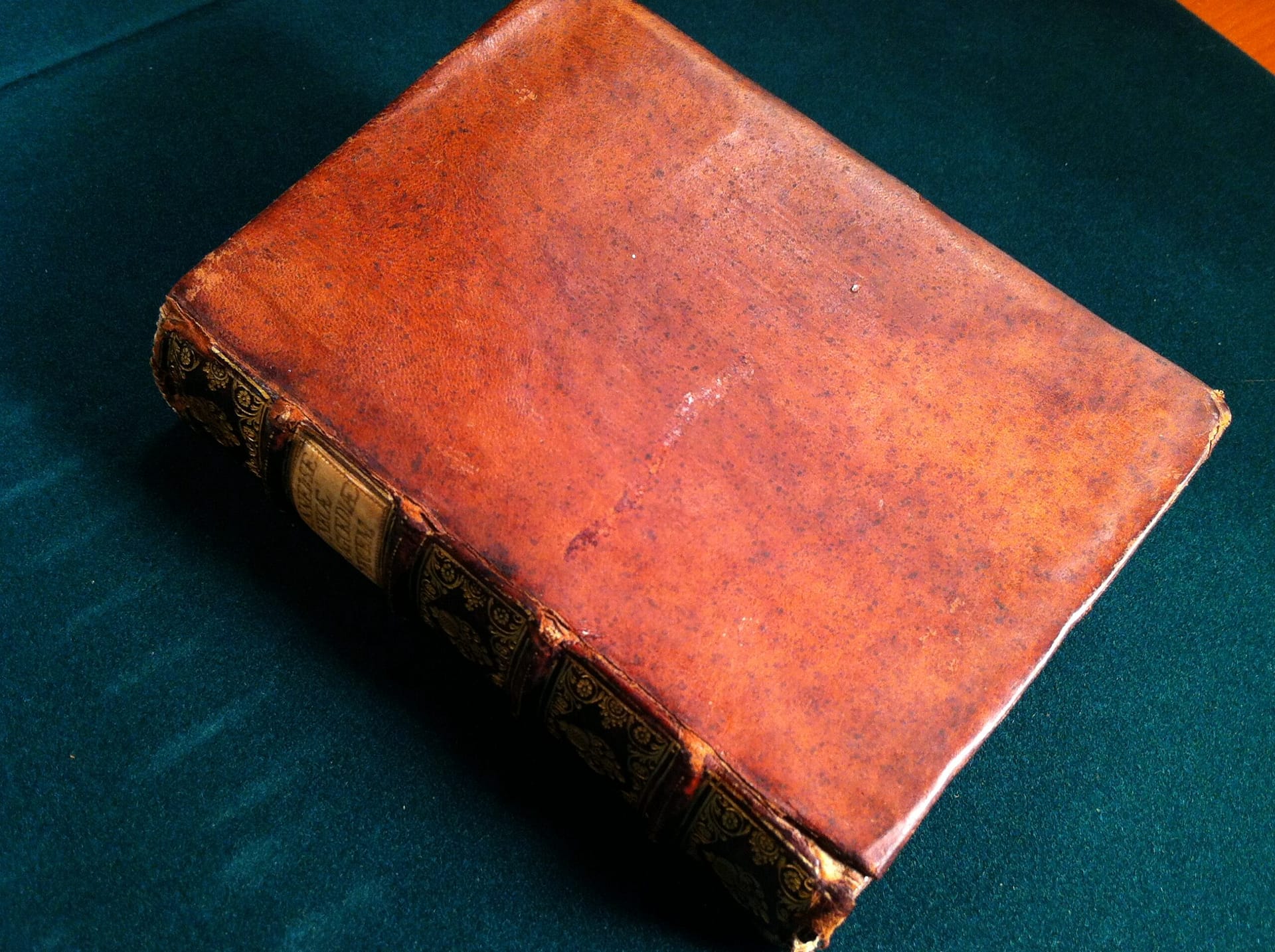
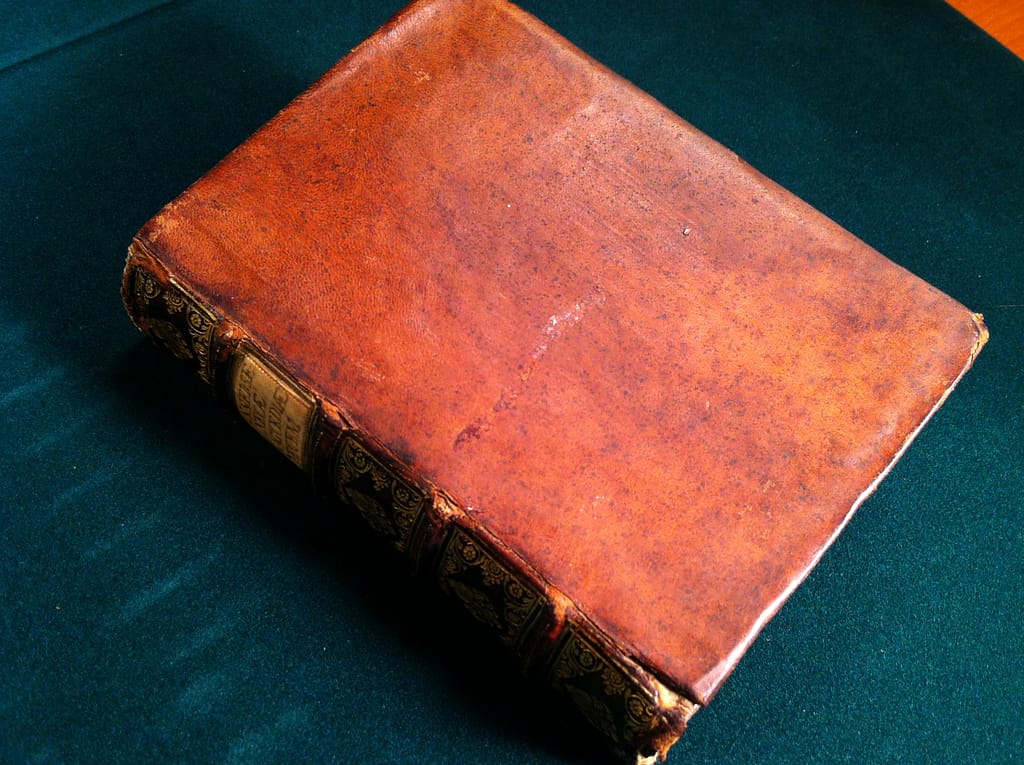
Here is a Latin note recently discovered in a Roman history book at the library in the Essex great-house of Audley End (Figure 1).
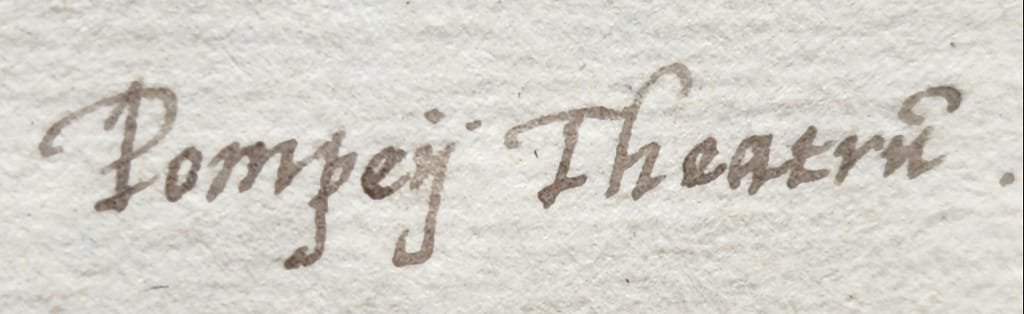
The note is written in an elegant, mid-16th century English Italic handwriting, one of several styles used in Elizabethan England, having been introduced into England with the so-called “Cambridge Italic” school under the pedagogical innovations of the leading Protestant educators, Roger Ascham and John Cheke (Fairbank and Dickins).
A 2023 article in the Journal of Forensic Document Examination identifies the writer of this note as de Vere, aka, the 17th Earl of Oxford and Lord Great Chamberlain of England (1550-1604). The office of Lord Great Chamberlain held huge ceremonial significance in 16th century England (and for long after). It had belonged to de Vere’s family since his 11th century ancestor Aubrey de Vere.
In case you might be tempted to think an annotator of such an honorific social position could have anything to do with common stage plays like Julius Caesar, in which Pompey’s theater is designated by name as the site of Caesar’s assassination:
Cassius. That done, repair to Pompey’s theatre.
[Exit CINNA]
Rest assured, no he could not.
Given the density and complementarity of already existing argument and evidence assembled over the last more than a hundred years (Warren 2023), a new and promising line of inquiry is the study of de Vere’s surviving annotations in several books. Over the last thirty years, such books have begun to yield their secrets, shedding light on the creative process that transforms reading into original dramatic art. In fact, De Vere’s marginal notes may be the “Rosetta Stone” in one of the most exciting literary mysteries of all time.
These books include de Vere’s 1570 Geneva Bible, now owned at the Folger Shakespeare Library in Washington DC, subject of a 2002 University of Massachusetts PhD dissertation.
More recently several history books at Audley End in Essex, and a 1563 edition of Seneca’s Ten Tragedies, recently donated to the Senate House Library in London, have been added to the growing corpus of de Vere annotations. The Audley Annotations are analyzed in detail in a 2023 Journal of Forensic Document Examination article. Because De Vere was a copious annotator of books, we believe that more annotations of his may remain undiscovered in the libraries of the world.
Who are We?
Our 501c(3) (pending) brings to the quest for de Vere’s books an unparalleled wealth of experience. Our Trustees include experts in early modern books, the interpretation of book annotations, ancient languages, the history of rhetoric, and forensic study of literary objects.
Through the meticulous preservation and study of de Vere’s handwritten marginalia, we hope to gain a deeper understanding of his literary contributions and historical significance, engaging scholars and enthusiasts alike in the exploration of his life and works.
What are our Plans?
Already available on our website is a growing archive of images of Edward de Vere annotated books. As of November, 2025, the archive is in the preliminary stages of construction, and many more images of as many as nine books will be available shortly.
Our initiatives include publishing research findings and collaborating with educational institutions to promote awareness of Edward de Vere’s contributions to literature. Edward de Vere’s marginalia yields insights into the creative process of one of history’s most enigmatic figures and open a window on the creative genesis of the Shakespeare plays. Join us in our mission to illuminate the past and inspire future generations through the lens of de Vere’s writings. While we are not a membership organization, we hope to be an organization that furnishes opportunity to dialogue and are working on discussion board software so that readers attracted to our archives can ask or answer questions and
Finally, given a board with a significant knowledge base on the authorship question, including three PhDs and at least four Master’s degrees in highly relevant disciplines, it is my personal hope that the website might serve as the broader scholarly community by applying the insights of their already published works to the new challenge of interpreting and understanding this dramatic new evidence in the authorship question.
Handwriting Resources
For the task at hand, forensic study of handwriting is a prerequisite. Here are some preliminary resources for recognizing Edward de Vere’s Handwriting.
By joining or donating to our foundation, you play a crucial role in advancing research and education related to Edward de Vere and his remarkable contributions to the world of literature.