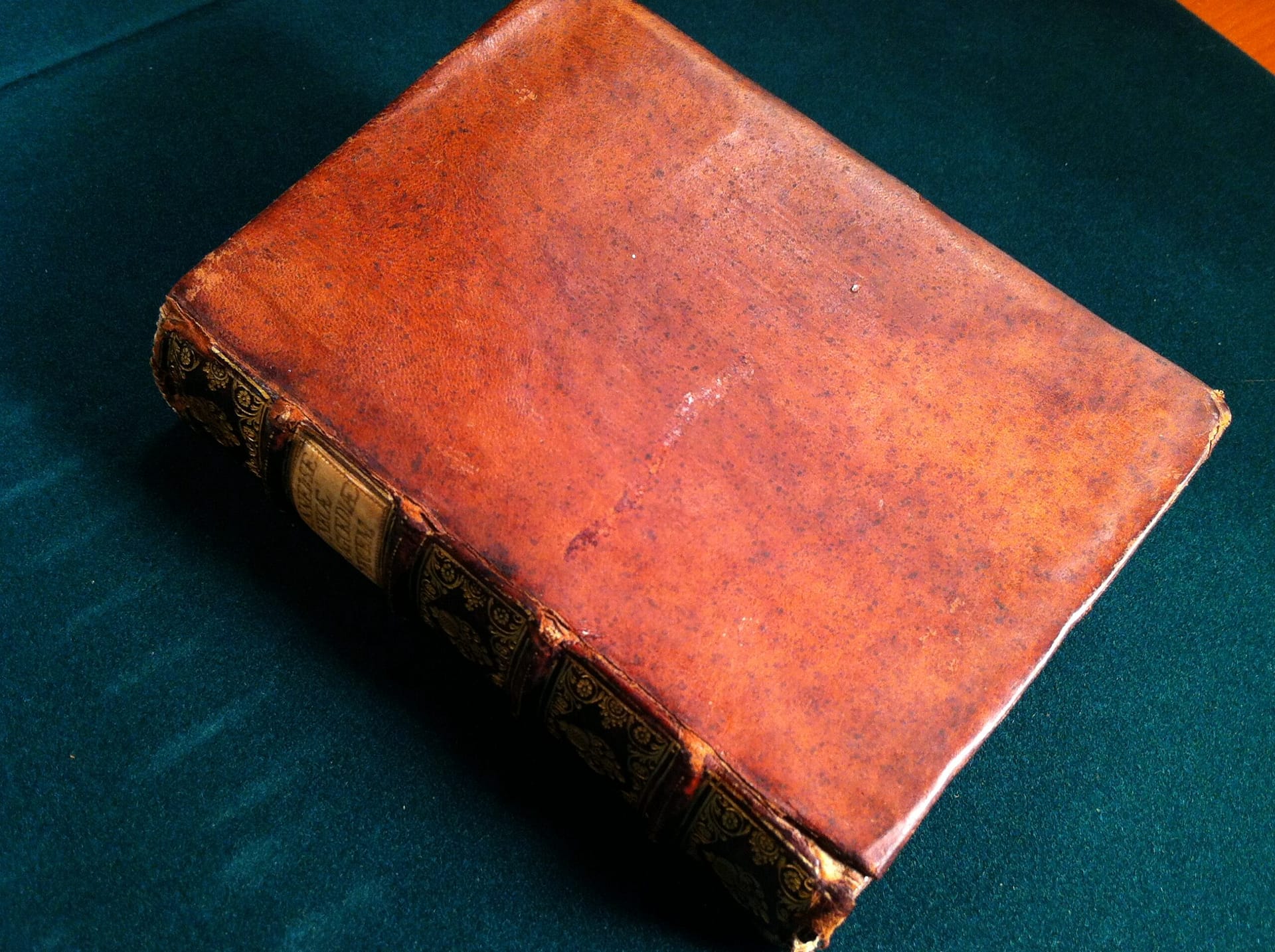
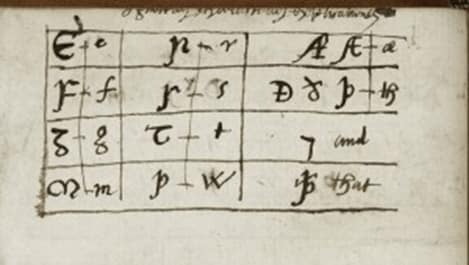
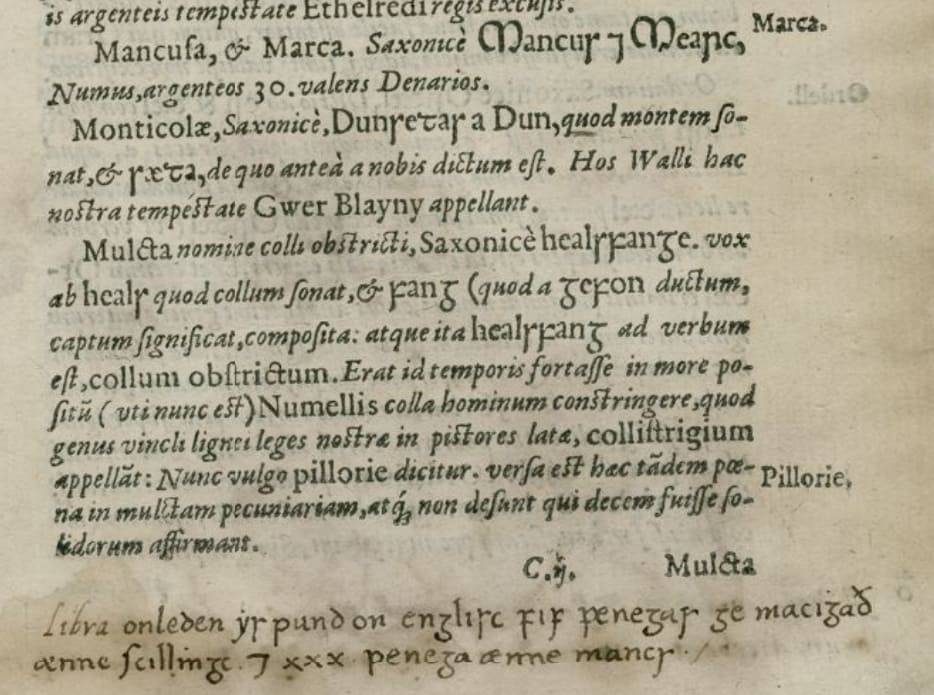
The Folger Library Copy of Lambarde’s Archaionomia (ancient laws) contains, first, a table of the Anglo-Saxon alphabet and then two long notes, in both Roman and Anglo Saxon alphabets, plus a significant number of underlined passages (usually in red ink) and various symbolic notations throughout the book.
As a young boy, Edward de Vere was tutored not only in Latin and Greek but by Alexander Nowell, then the owner of the Beowulf MS, in Anglo Saxon. Archaionomia, published in 1568, chronicles the ancient laws and customs of England, including laws involving (among other topics) marriage, economic transactions, and measures of value.
The Folger Library has several copies of this book, but this copy contains on the title page a forged “William Shakespeare” signature that has been long celebrated as a “seventh signature.” However, the Latin notes in the book are in a fine italic hand that shows indubitable connections to de Vere’s handwriting as established in other contemporaneous documents.
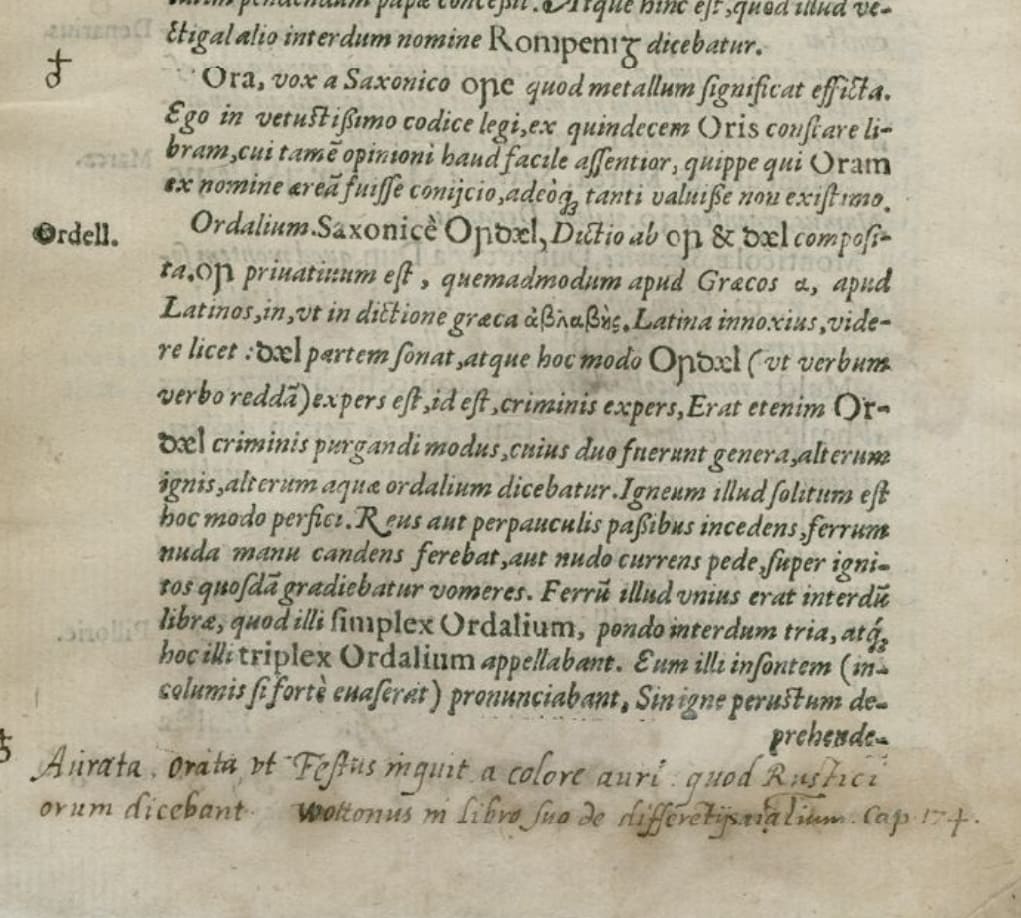
De differentiis animalium libri decem. Ad sereniss. Angliae regem Edoardum 6. Cum amplissimis indicibus, in quibus primùm authorum nomina, unde quaequae desumpta sunt, singulis capitibus sunt notata & designata: deinde omnium animalium nomenclaturae, itèmque singulae eorum partes recensentur, tam graecè, quàm latinè 1552.
In Wotton, in other words, the country people are accustomed to spell the word aurum as orum – as if cognate with orata (prayers). The etymology appears to be influential in Shakespeare: Horatio. [aside] His purse is empty already. All’s golden words are spent (5.2.130-31). In Lucrece, “golden words” are peacemakers: “but for loss of Nestor’s golden words,/ It seem’d they would debate with angry swords” (1472-73). Both uses relate to an underlying Shakespearean interest in the swords and words or “prayers as weapons” or magical incantation (“double, double, toil and trouble,” etc.) motifs.